Journal · Portrait Sessions
Howth — castle walls and cliff-edge light
Howth · North Dublin · Castle Grounds & Cliff Walk
The Locations
Two settings, one headland, entirely different portraits.
Howth sits at the end of a DART line on Dublin's north side — a fishing village on a rocky headland with the Irish Sea on three sides. It is thirty minutes from the city centre and feels like a different country. What makes it remarkable for portrait photography is that it offers two completely distinct settings within easy walking distance of each other: the old castle grounds, enclosed and lush, full of ancient stone and rhododendron, and the cliff walk above, wild and open, with the sea dropping away below and the whole arc of Dublin Bay visible to the south.
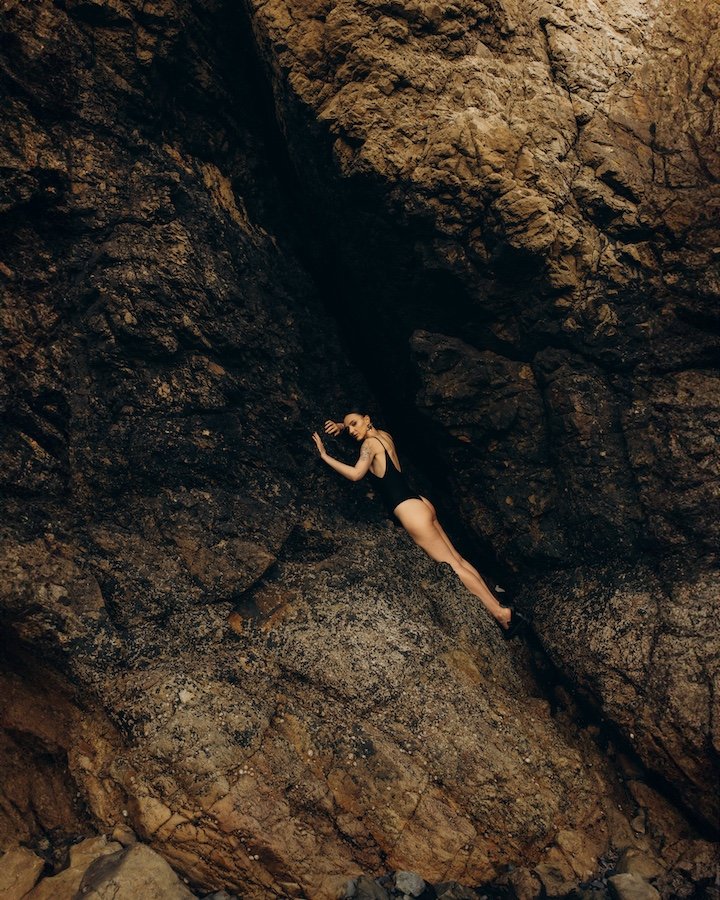
Most locations offer one mood. Howth offers two, and they could not be more different. A session here can move from the sheltered, textured intimacy of the castle walls to the elemental exposure of the cliff edge within the same afternoon. The photographs from each setting look like they were taken a world apart.
Howth · North Dublin
Individual Portraits
Castle & Cliff Walk · Year-Round
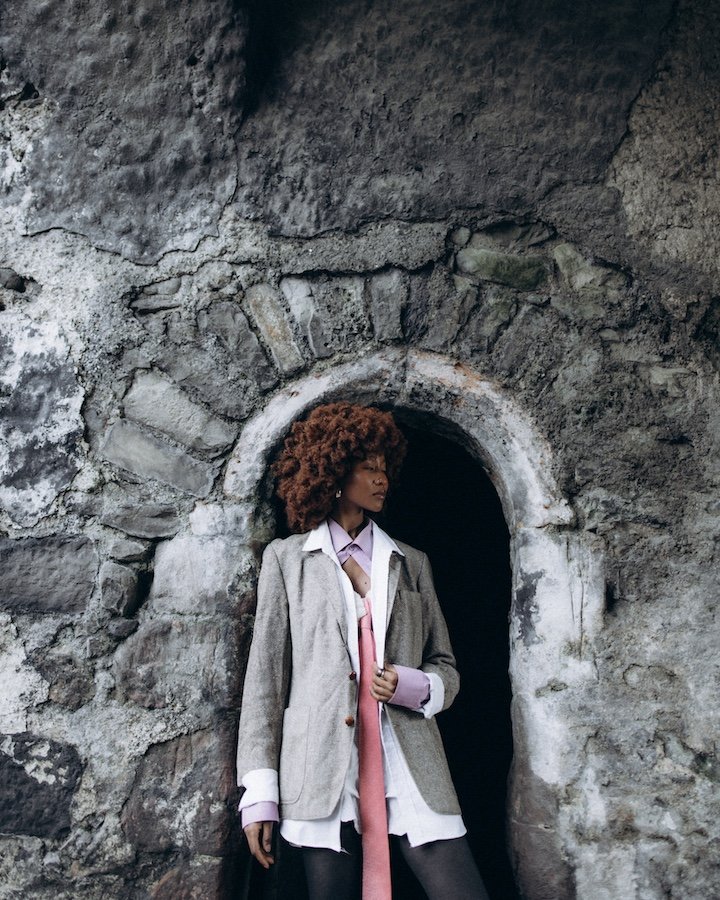
Howth Castle — enclosed, textured, atmospheric
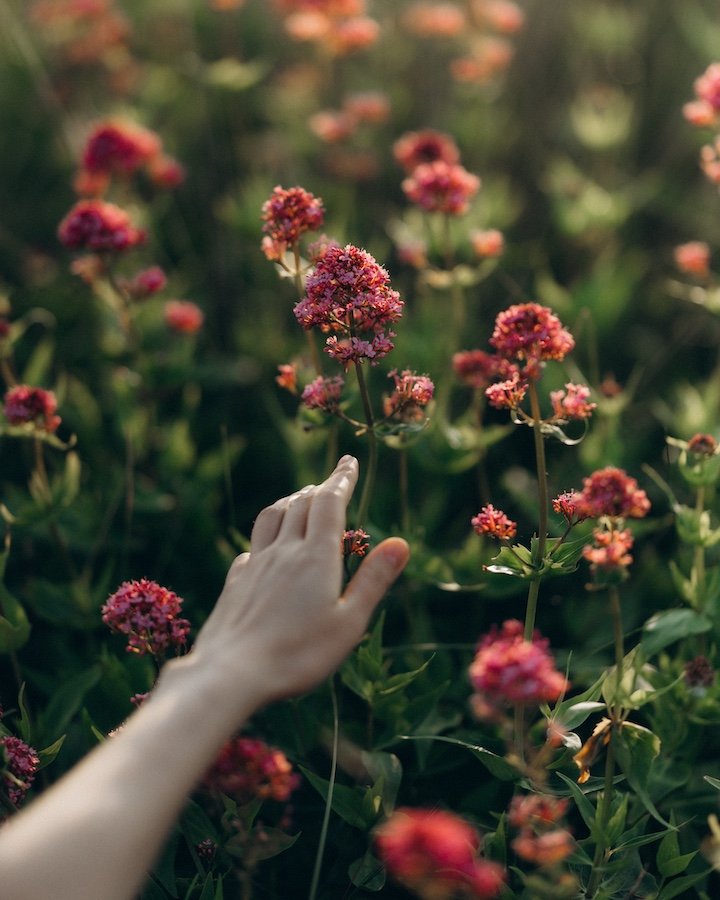
The castle grounds at Howth are one of the most unusual portrait locations in Dublin. The walled gardens and the approach to the castle itself give stone, ivy and deep green at every turn — the kind of backdrop that photographs with a timeless, almost painterly quality. The rhododendrons, which bloom dramatically in late spring, transform the grounds into something that barely looks real. Outside of flowering season the castle walls, the old gate archways and the wooded paths offer a more stripped-back version of the same atmosphere: textured, sheltered, entirely its own.
The enclosed nature of the castle grounds means the light here is softer and more filtered than on the cliff above. It arrives through the canopy and between the stone walls, pooling and bending in ways that are flattering for portraits and difficult to replicate anywhere else. Sessions at the castle tend to feel intimate — there is less sky and more foreground, which pulls the person being photographed into the centre of the frame rather than placing them against a wide backdrop.
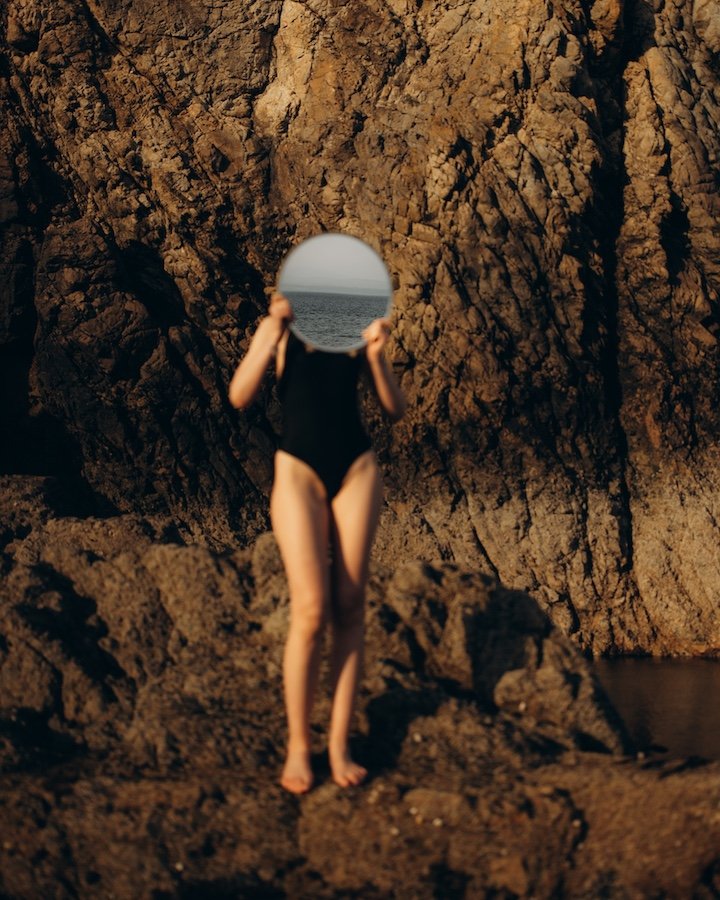
The Cliff Walk — wild, open, elemental
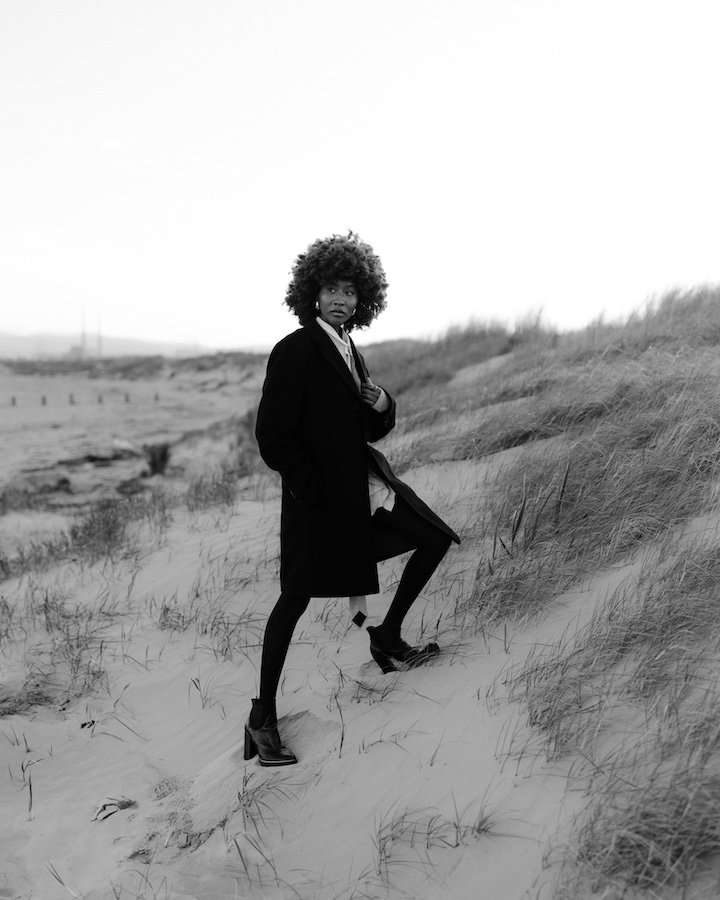
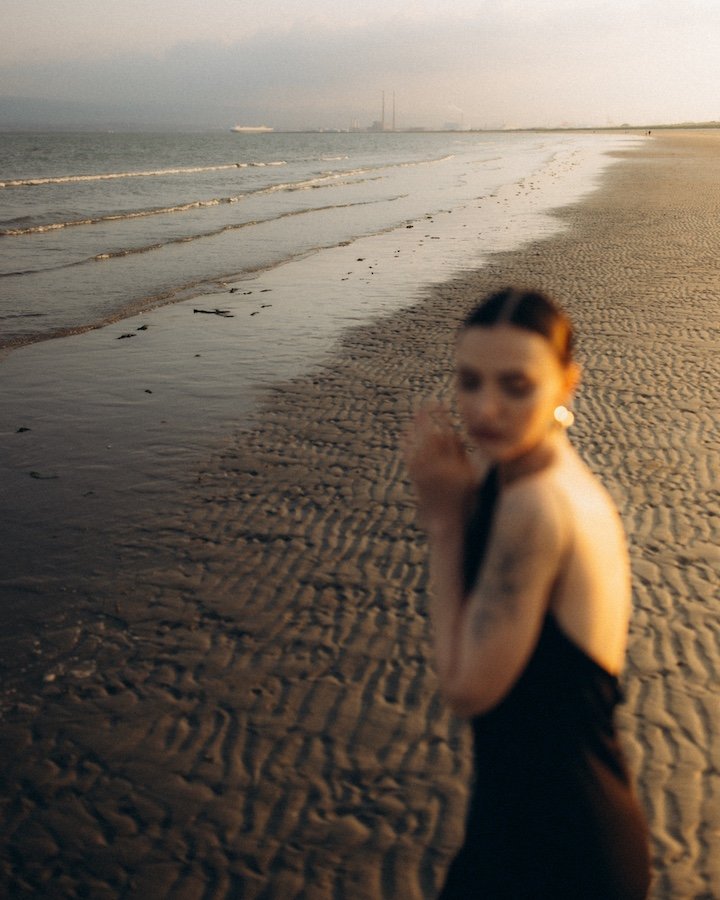
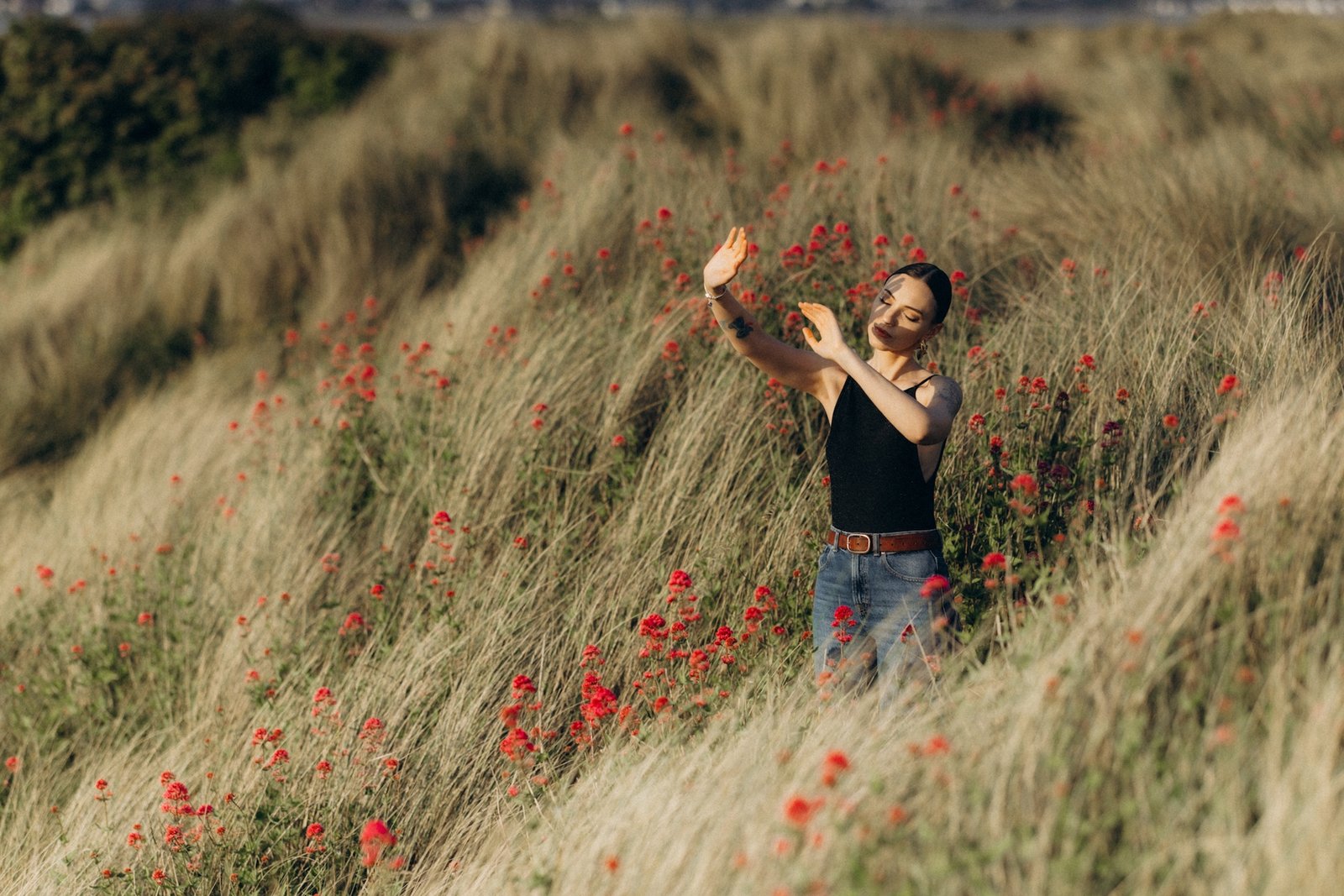
The Howth Cliff Walk is the opposite of the castle in almost every way. The path runs along the southern face of the headland for several kilometres, with the cliff dropping sharply to the sea on one side and heather-covered hillside rising on the other. The light is coastal and broad — the same wide, multi-directional quality found at Bull Island or Killiney, but with an added verticality from the cliffs. Frames here tend toward the dramatic: sea behind, sky above, heather and gorse in the foreground, and the person standing in the middle of all of it.
The cliff walk is exposed to whatever the Irish Sea is doing on any given day, which is usually something interesting. Wind is almost always present, adding movement to hair and clothing that photographs as energy rather than inconvenience. On clear days the views south across Dublin Bay toward Killiney and the Wicklow Mountains are extraordinary. On overcast days the sea turns silver and the heather goes vivid purple-grey — equally remarkable, just differently so.
Planning a Howth portrait session
Howth is thirty minutes from Dublin city centre by DART — the train runs directly from Connolly and Pearse stations to Howth terminus, making it one of the most accessible out-of-city portrait locations in Ireland. The castle grounds are a short walk from the DART station; the cliff walk begins at the eastern end of the harbour and the path is well-signposted from there.
Sessions that combine both locations typically run two hours. We begin in the castle grounds while the light is still overhead and diffused, then move to the cliff walk as the afternoon opens out and the sea light builds. The transition between the two settings — from enclosed and textured to wild and open — gives the session a natural arc that the photographs reflect. If you prefer to focus on one or the other, ninety minutes is plenty for either location alone.
The cliff walk is exposed in all seasons, so layers are always a good idea. Wind on the headland can be significant, but as mentioned it tends to be an asset rather than a problem. Spring brings the rhododendrons in the castle grounds — late April to early June, the colours are extraordinary and the grounds are at their most lush. Autumn brings a different version of that richness: amber and russet in the trees, the sea going dark blue-grey, and a quality of late light that is among the best the Dublin coastline has to offer.